PhD Mentorship and
Gender Representation in
Academic Mathematics
NetSci
June 4th, 2026
Hi everyone! I’m Phil Chodrow
Prof. of CS at Middlebury College, a small liberal arts college in Vermont.
Students/postdocs: ask me about #LiberalArtsLife if you’re curious.
I like aikido, tea, my cats, being outside, hypergraphs, and math models of social systems.



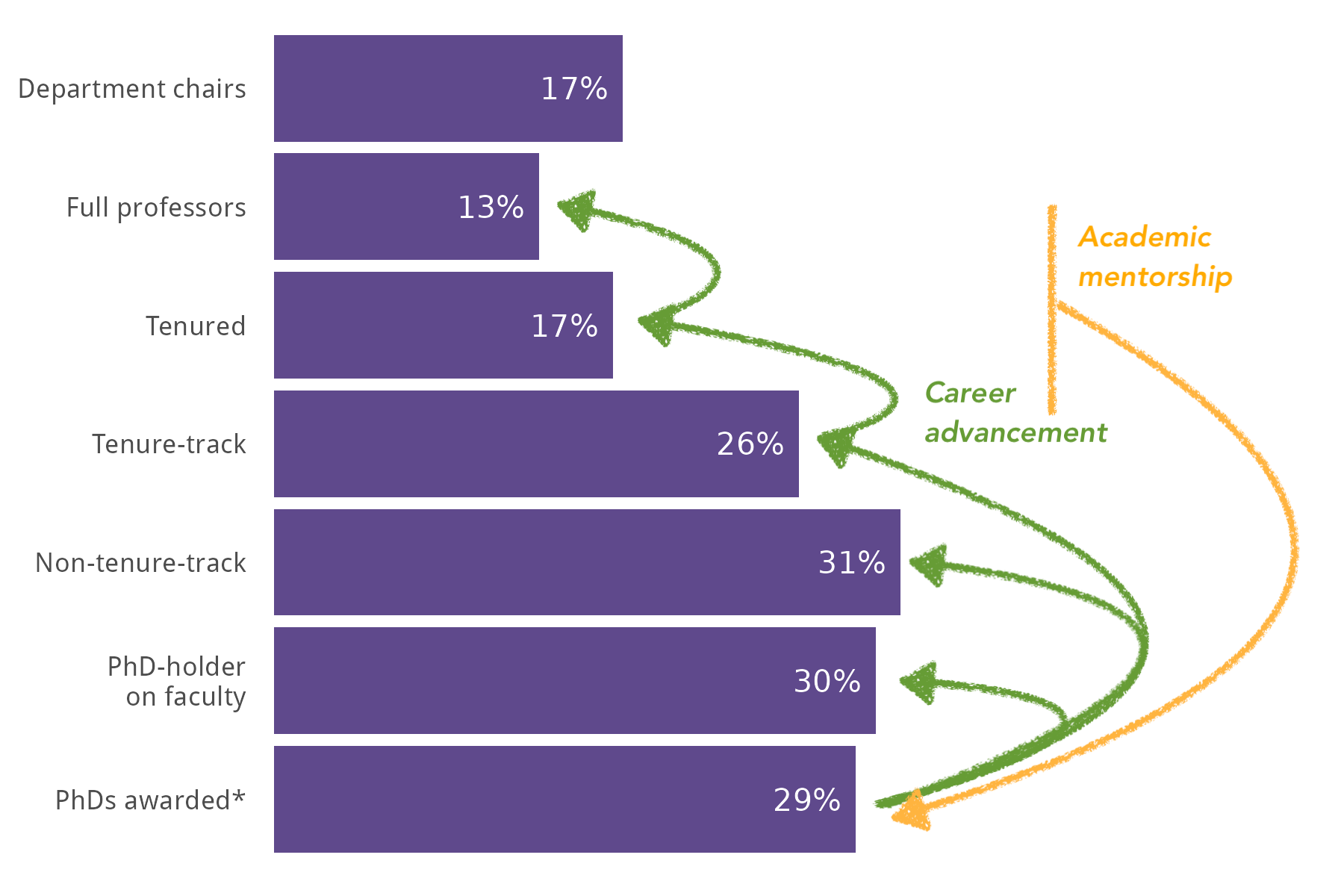
Gender Representation in Academic Math
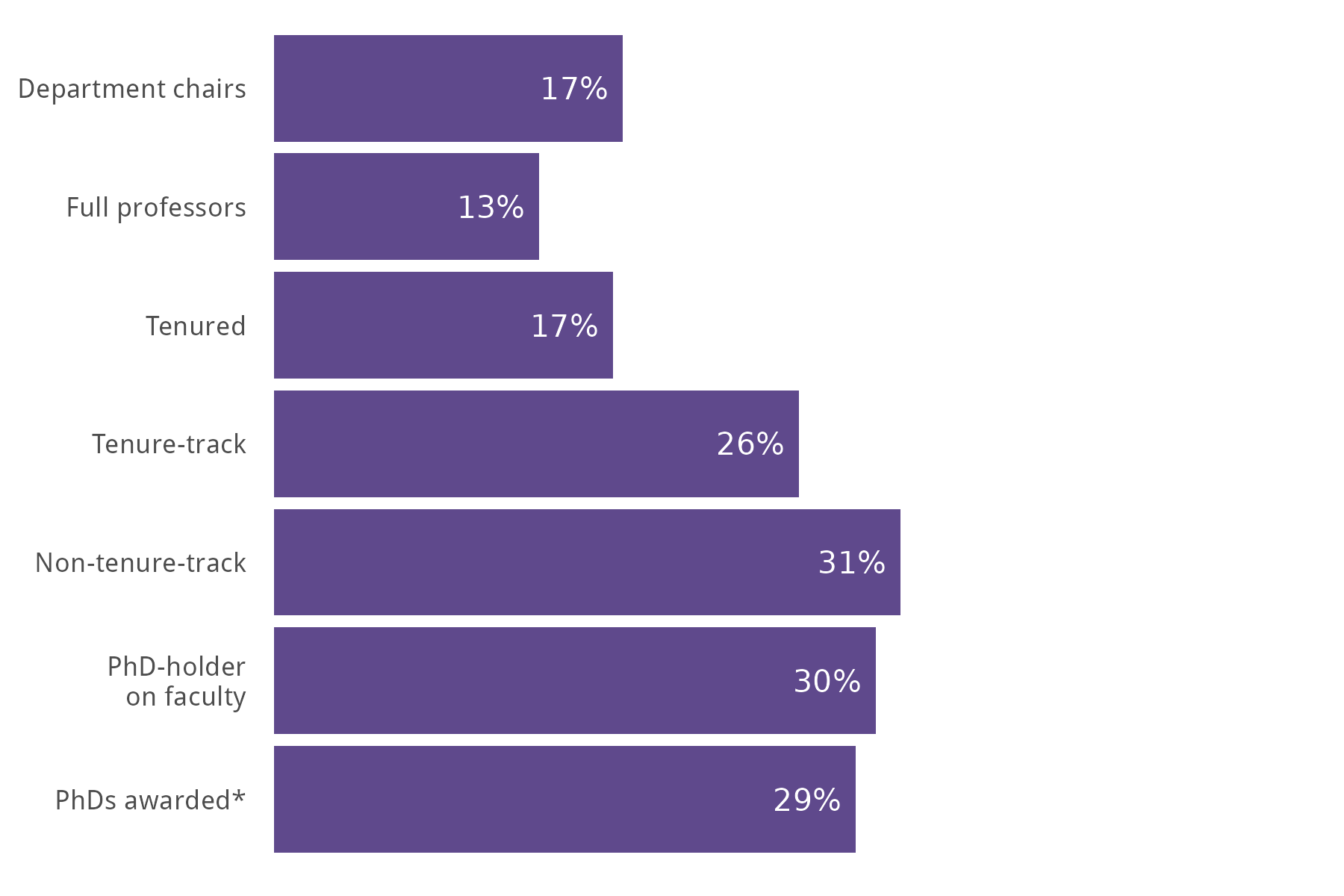
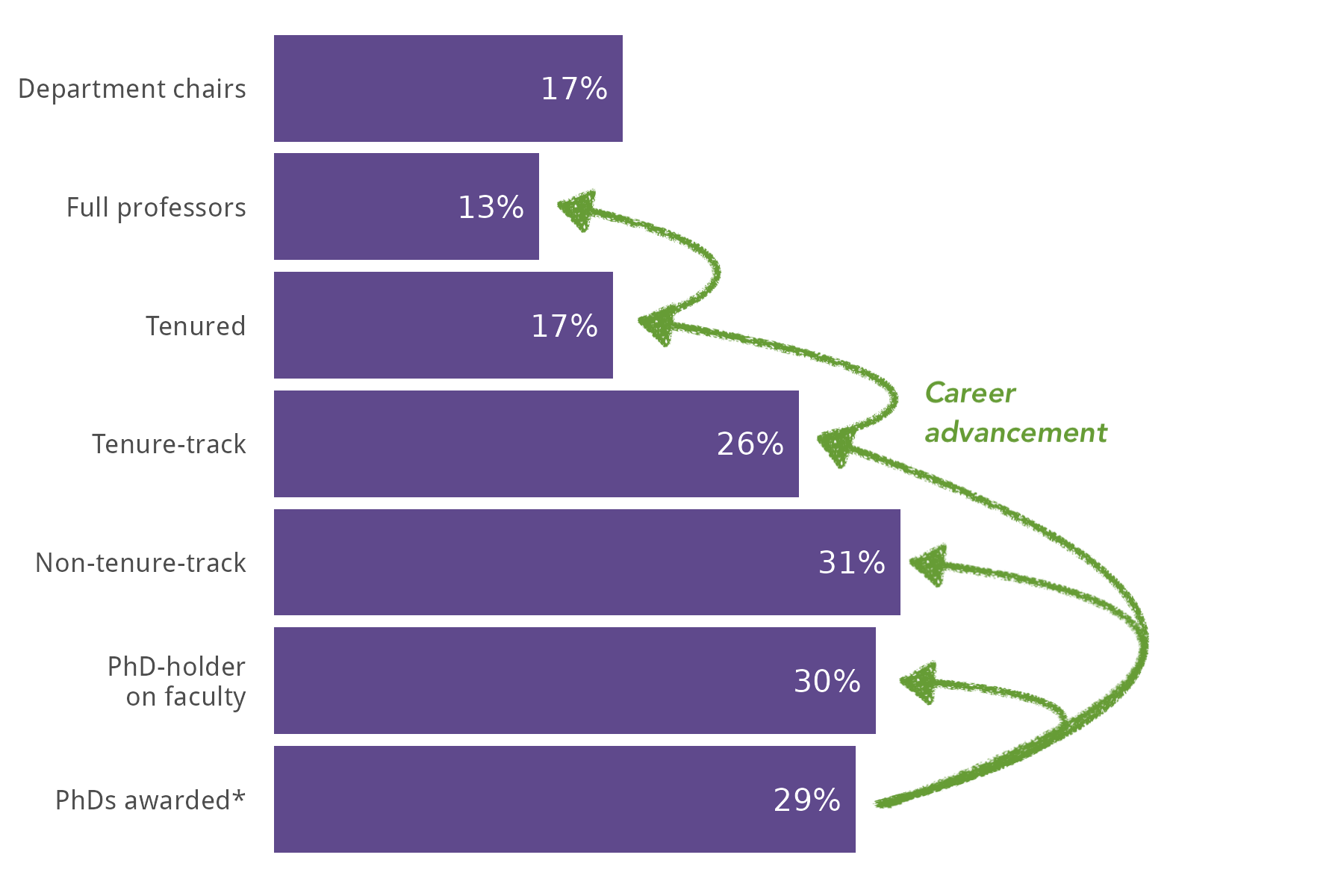
Data from the 2020 AMS Departmental Profile 🤦🏻♂️
*Actually this one is from 2017-2018 (Report on New Doctorates) 🤦🏻♂️🤦🏻♂️🤦🏻♂️
Career advancement shapes the ecosystem


But so does mentorship!
The Team

|
Heather Brooks |
|
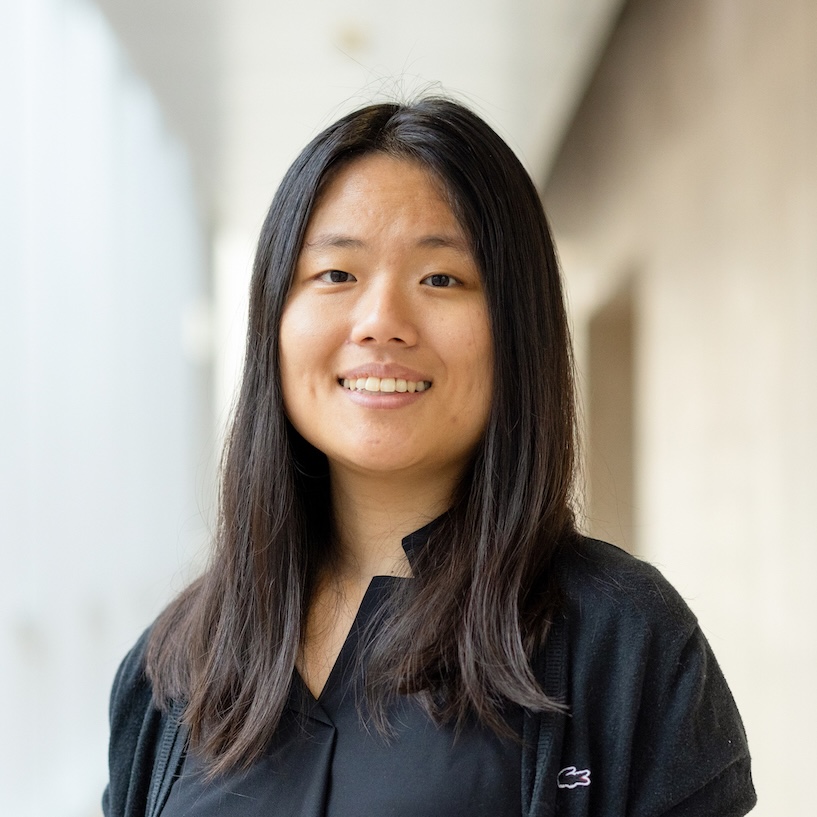
Harlin Lee |

|
Mason Porter |

|
Juan G. Restrepo |

|
Anna Haensch |

|
Phil Chodrow |
Our Data


Ben Brill, UCLA ’22
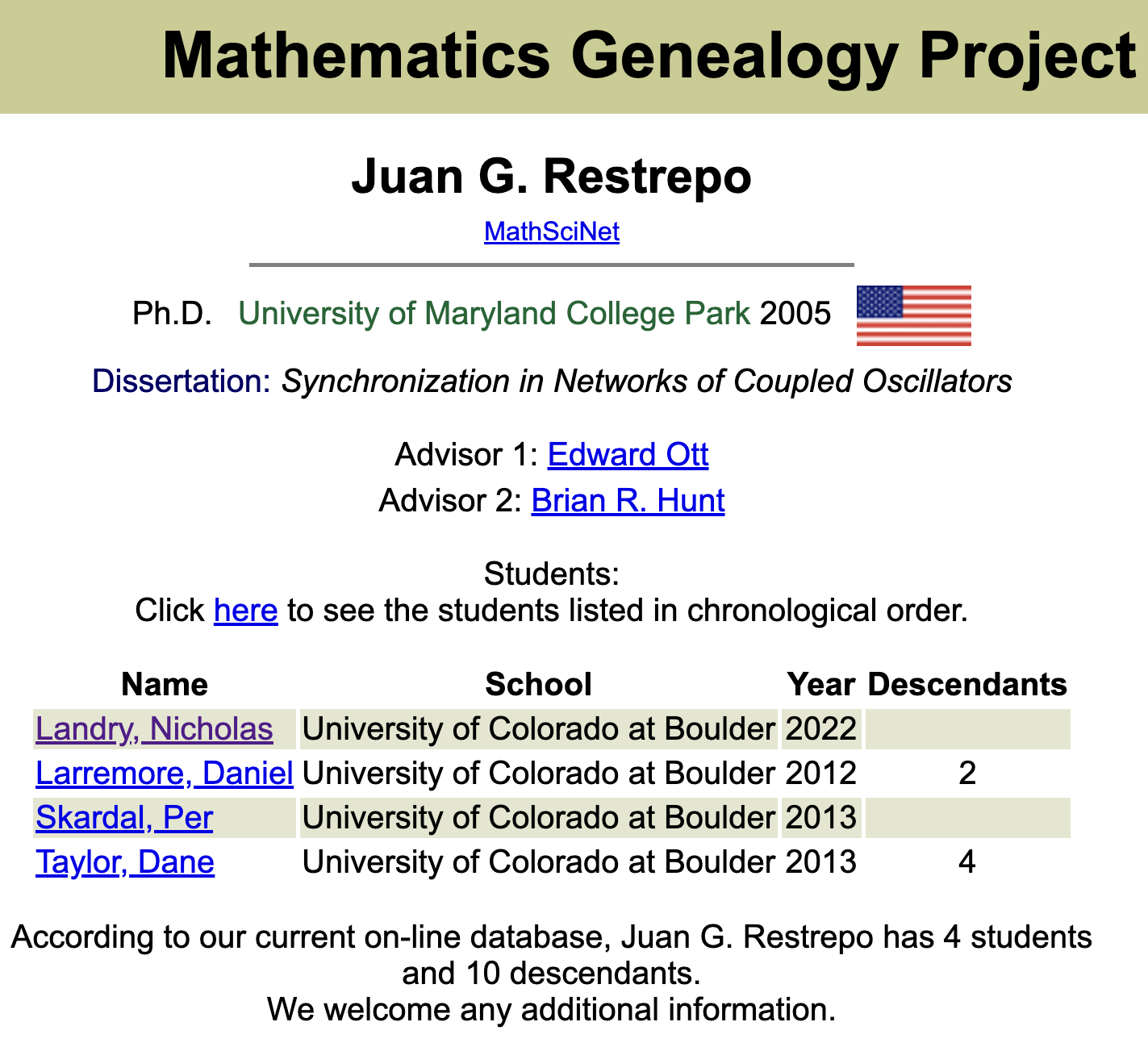
Total of 116,306 advisor-student pairs in the US since 1950, representing 21,781 distinct advisors. We observe or estimate math subfields for 94% of these pairs (predictions based on thesis titles). We estimate gender for 95% of PhD students and 97% of advisors.
Modeling Gendered PhD Production by an Advisor
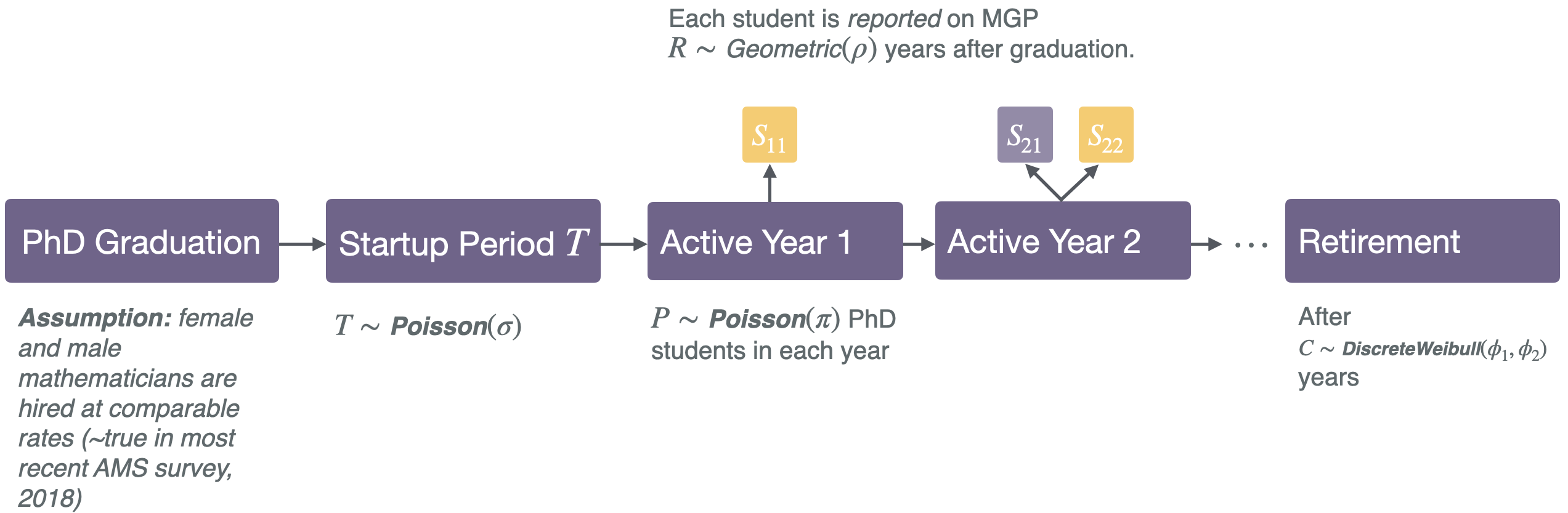
Men have estimated careers ~4 years longer (on average)
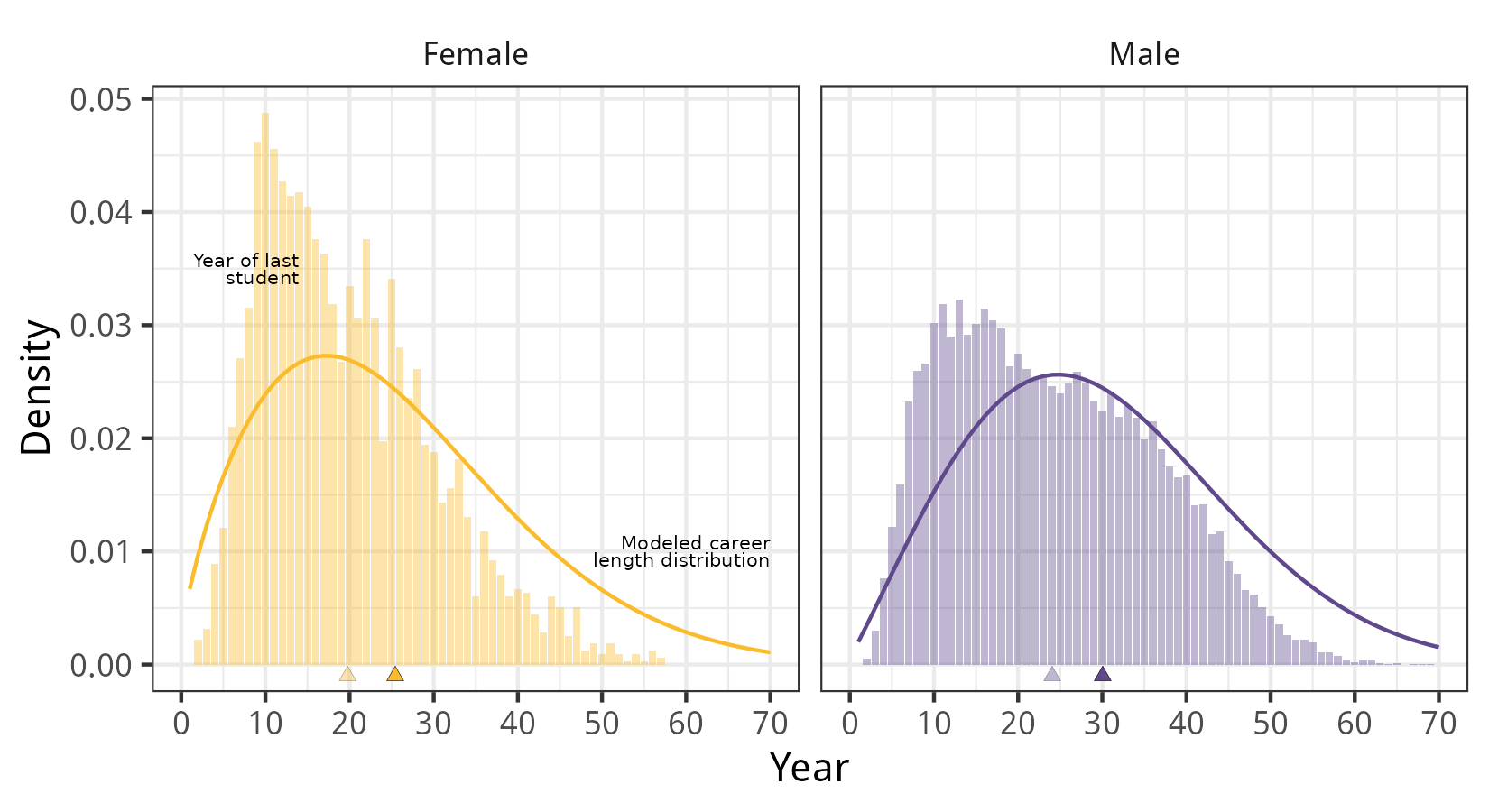
Attrition
Addressing disparities in career attrition for female faculty would help to close the gender gap.
Qualitative match to Barrett-Walker et al. (2023).
Longer careers \(\times\) more students per year = more students per career
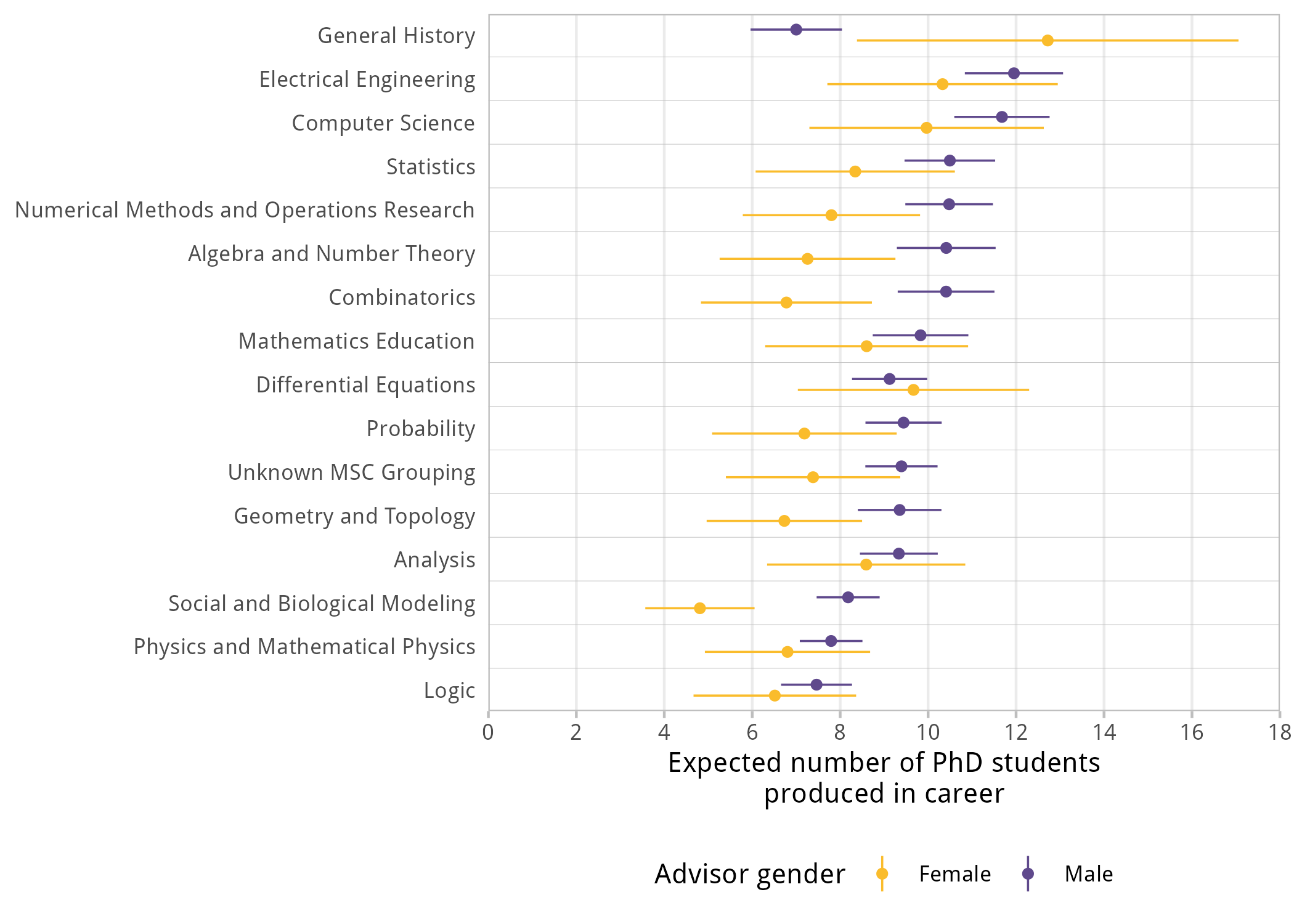
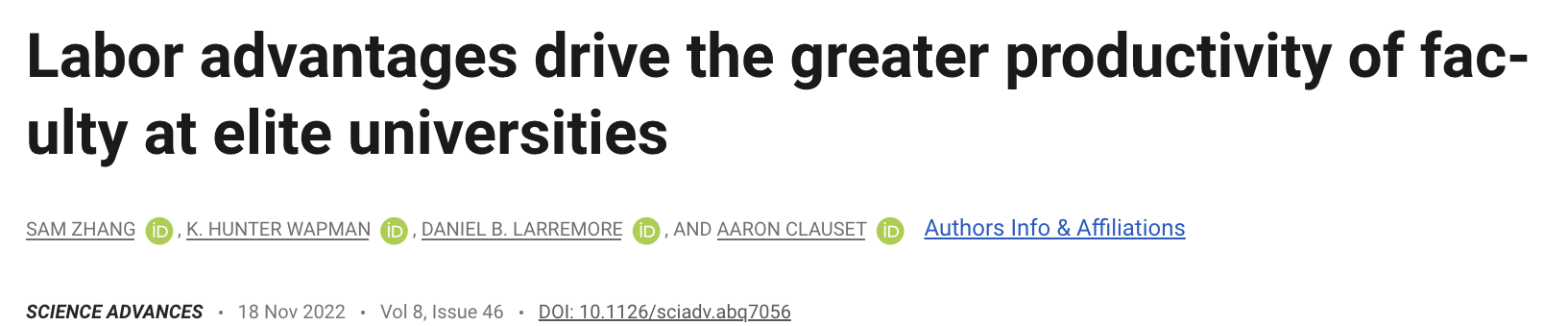
Hypothesis: greater student production per year by male advisors reflects unequal access to research resources; cf. Zhang et al. (2022)
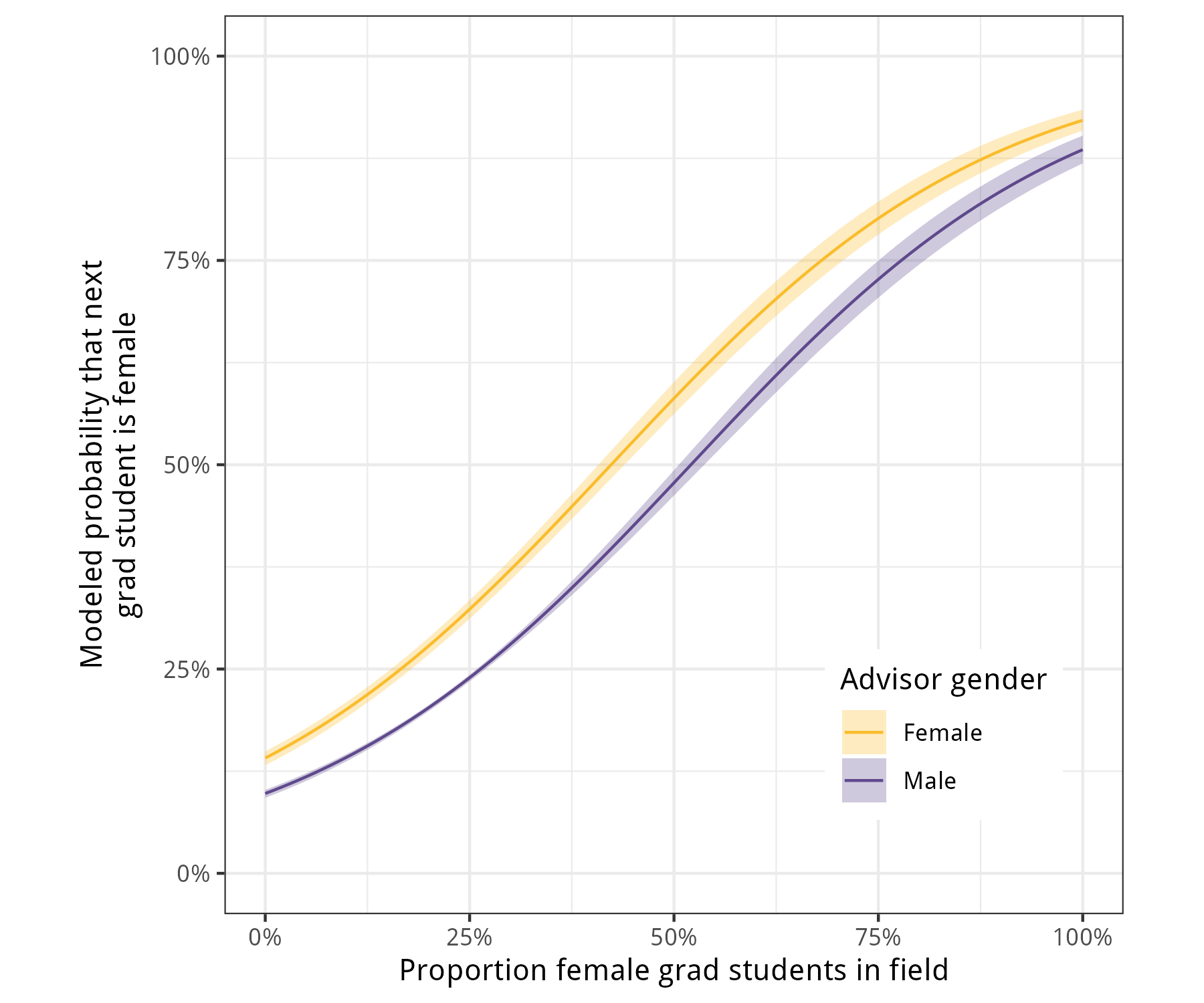
Homophily effects: advisor-student and student-student
Both the gender of a students’ specific advisor and the overall proportion of female advisors in the subfield’s population contribute to the likelihood that the student is female.
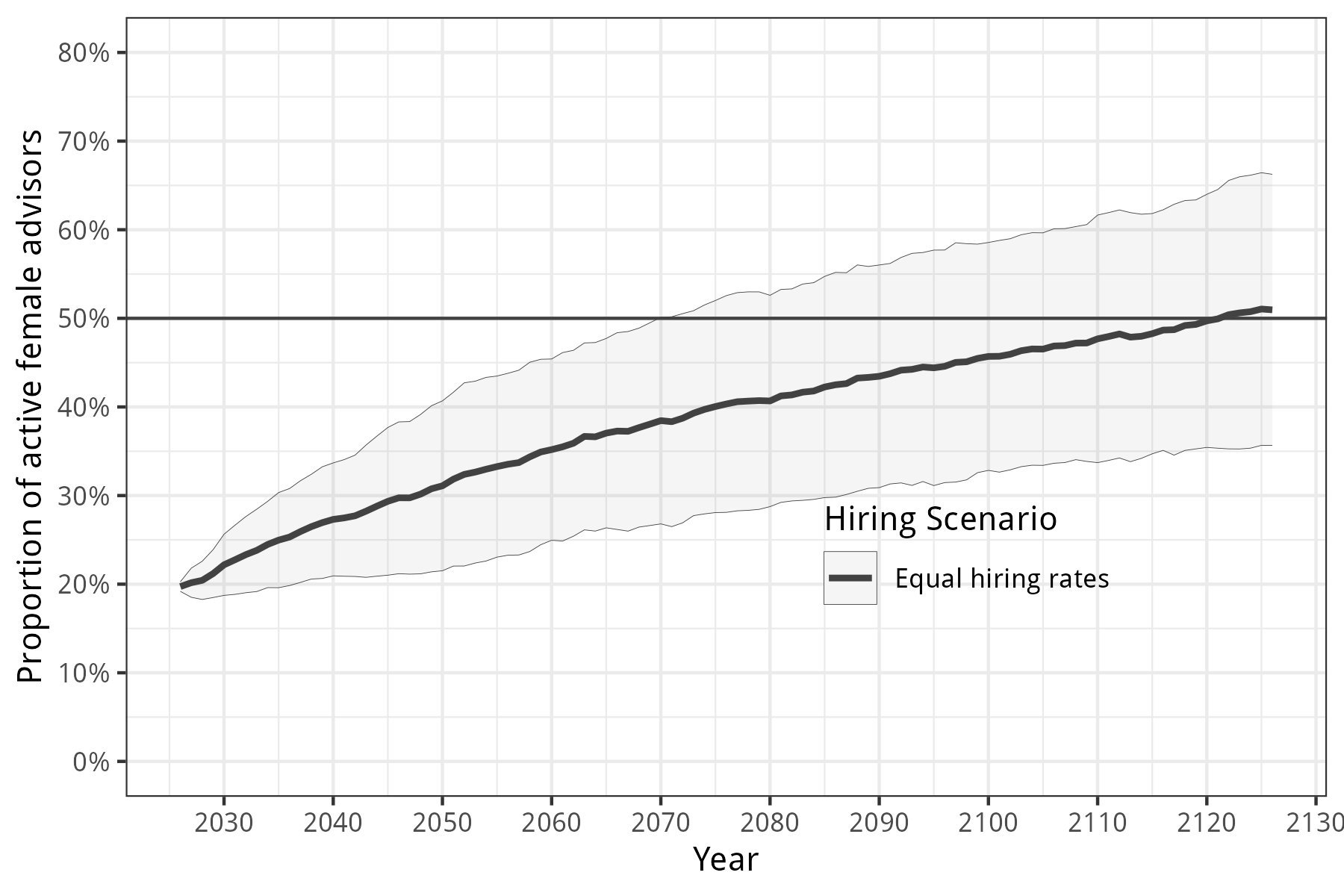
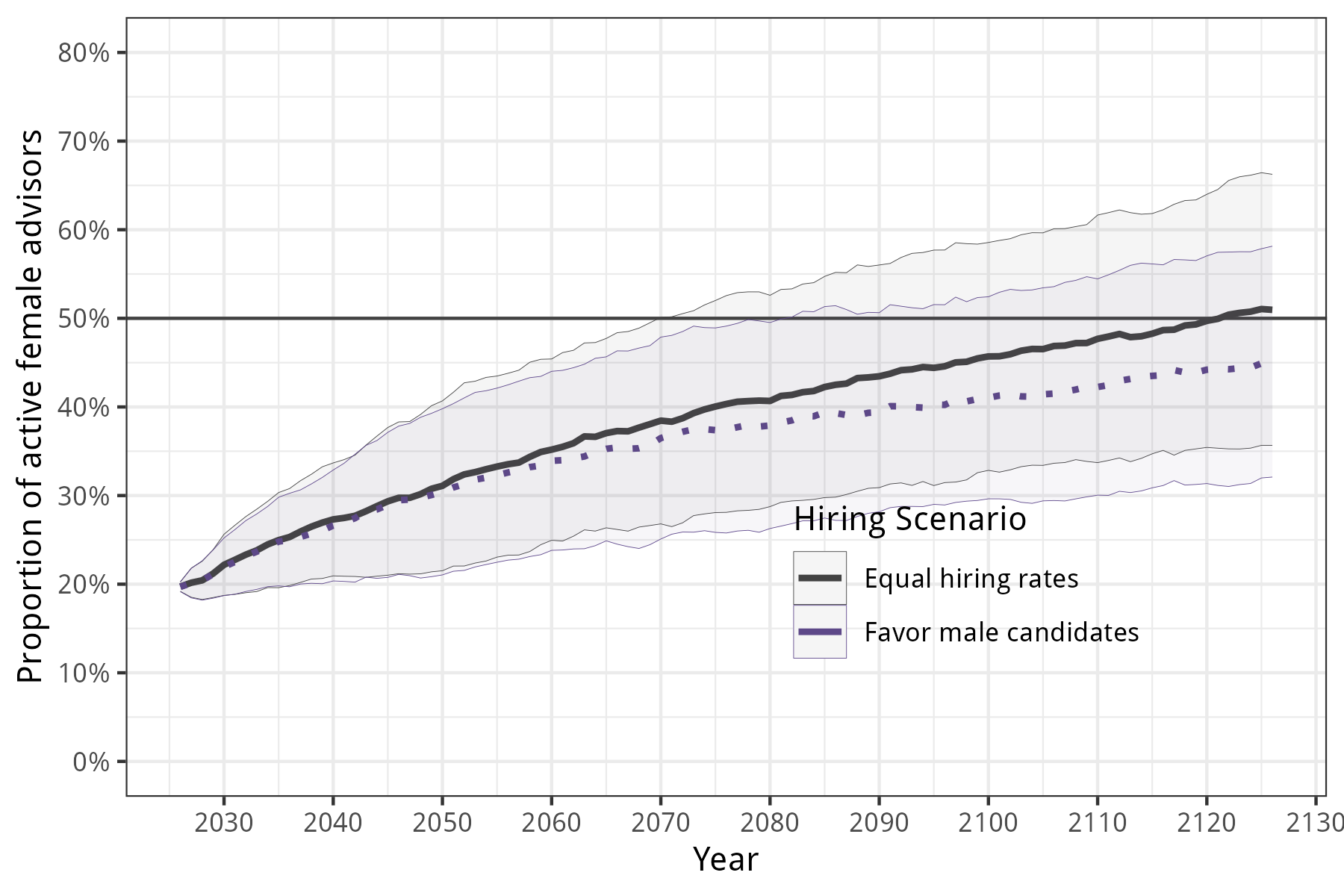
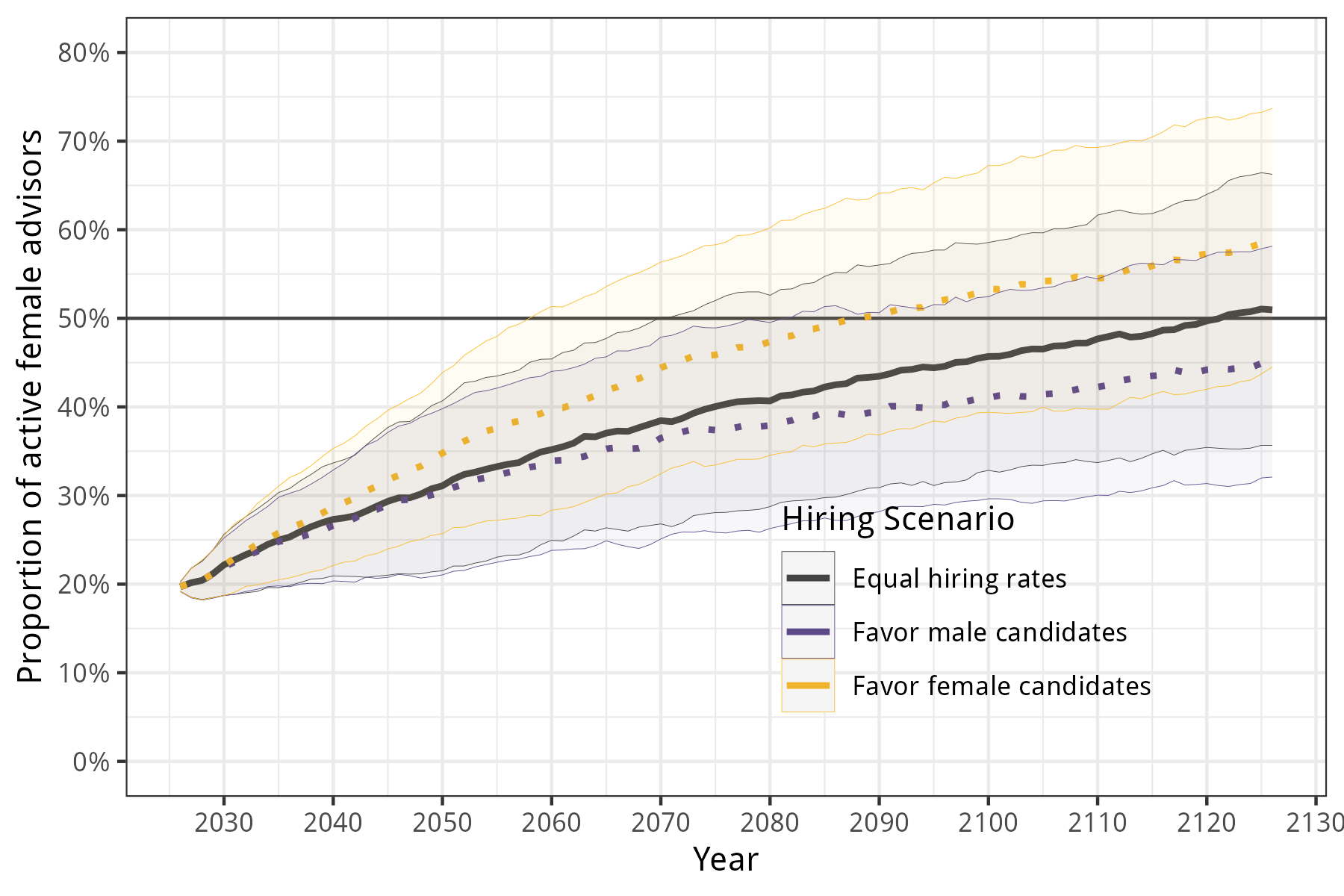
Modeling Interventions on Medium Timescales: Hiring
Equal hiring rates
Suggested in most recent AMS survey data.
Male-biased hiring
Men 20% more likely than women to be hired as faculty.
Female-biased hiring
Women 20% more likely than men to be hired as faculty.
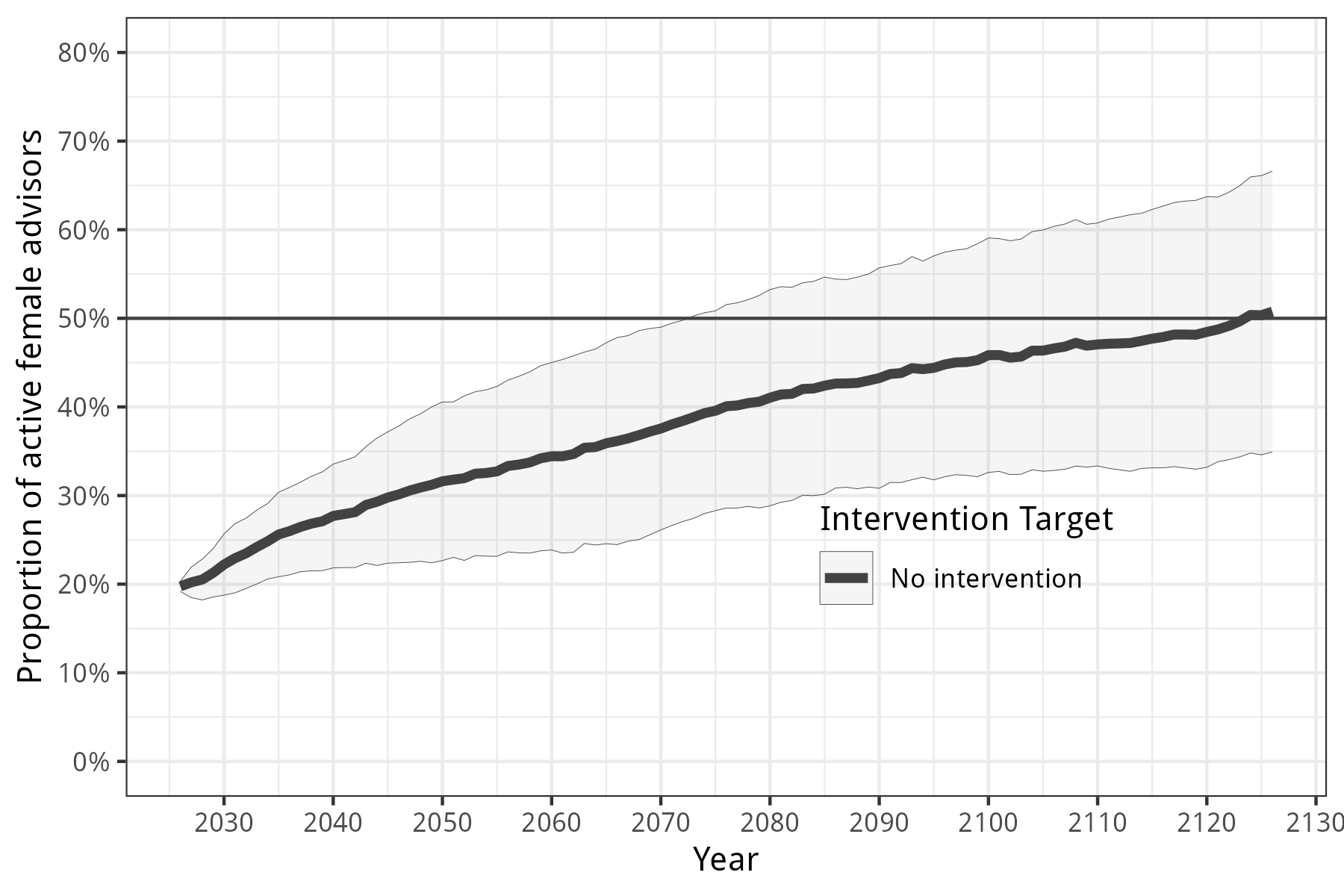
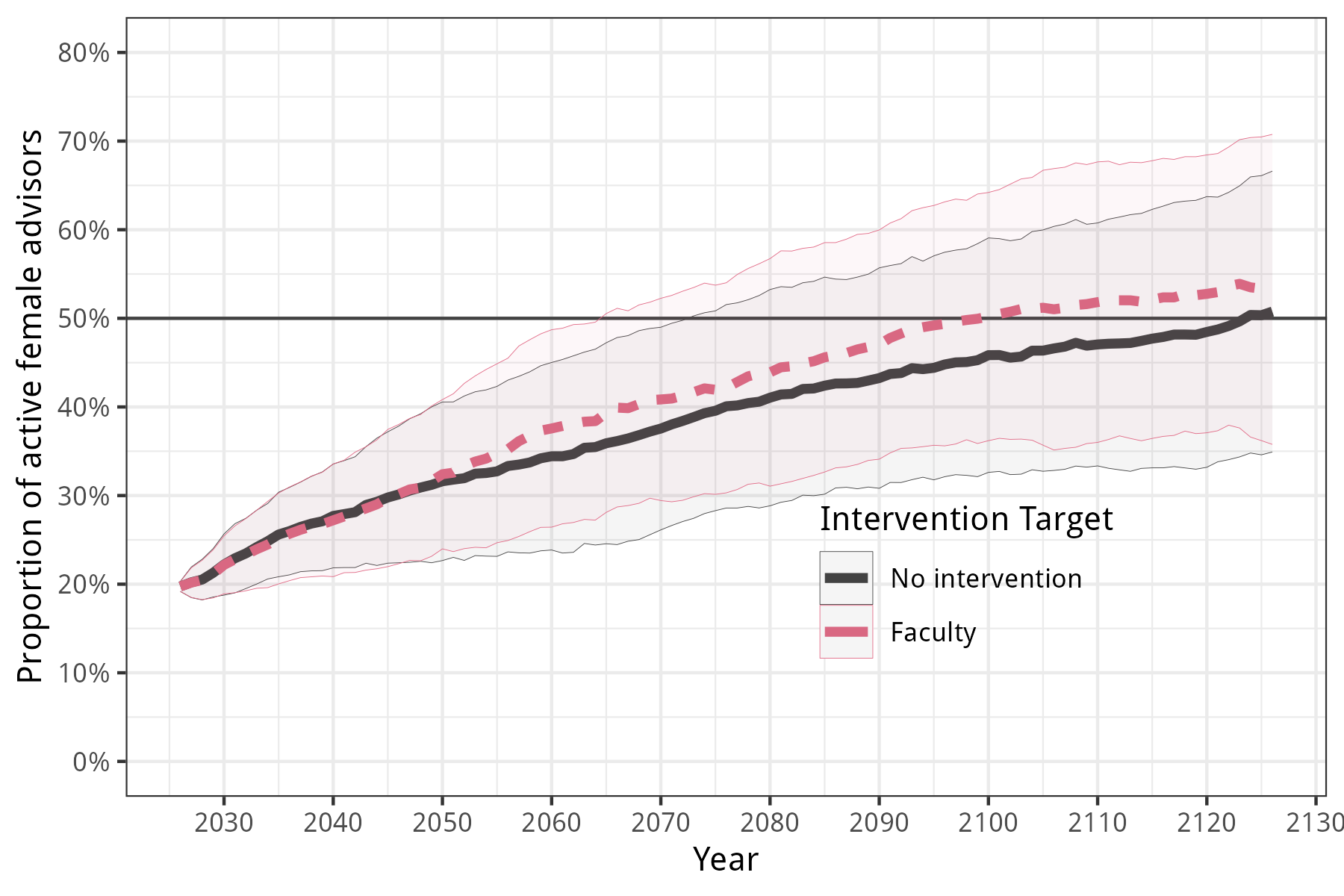
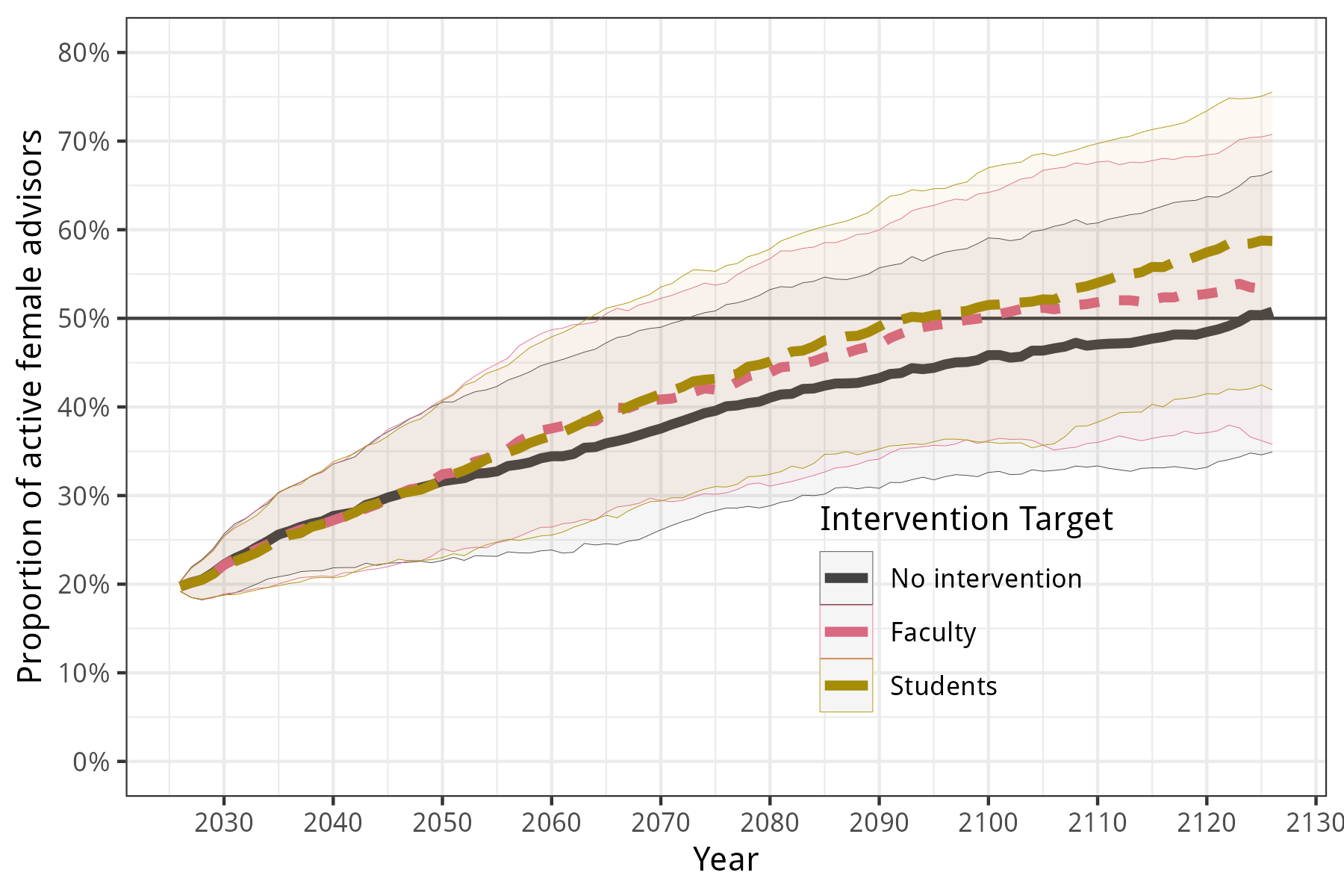
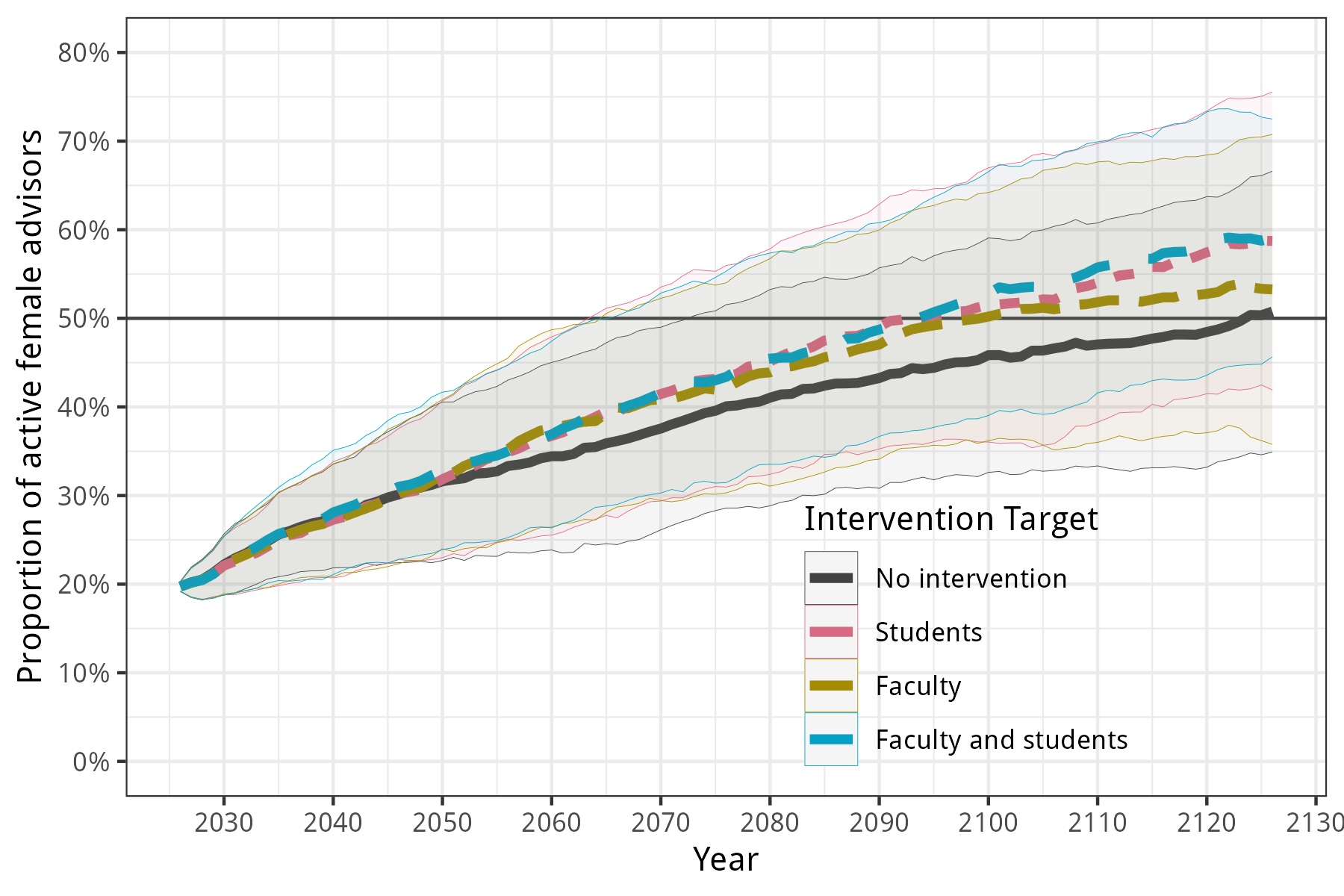
Intervening on Attrition + PhD Production
No intervention
Attrition + PhD production as estimated by model.
Faculty Intervention
Gender parity among current faculty on attrition and PhD production.
Student Intervention
Gender parity among future students on attrition and PhD production.
Faculty + Student Intervention
Both interventions combined.
What We’ve Learned
|
Mentorship: Female advisors are more effective in attracting or retaining female graduate students. |
|
Belonging: Representation in the grad student community attracts women to programs and subfields. |
|
Attrition: Addressing disparities in career attrition for female faculty would help to close the gender gap. |
Thanks everyone!
|
|
Heather Brooks |
|
Harlin Lee |
|
Mason Porter |
|
|
Juan G. Restrepo |
|
Anna Haensch |
|
Ben Brill |

|
National Science Foundation |

|
ICERM @Brown |
Preprint coming soon 😬😬😬