Growing Hypergraphs with
Edge Copying
TopoNets@NetSci
June 2nd, 2026
Hi everyone! I’m Phil Chodrow
Prof. of CS at Middlebury College, a small liberal arts college in Vermont.
Students/postdocs: ask me about #LiberalArtsLife if you’re curious.
I like aikido, tea, my cats, being outside, math models of social systems, and hypergraphs.



My Intellectual Journey in Hypergraphs
Real talk: this was a reliable source of low-risk theory problems as I established my career.


But…
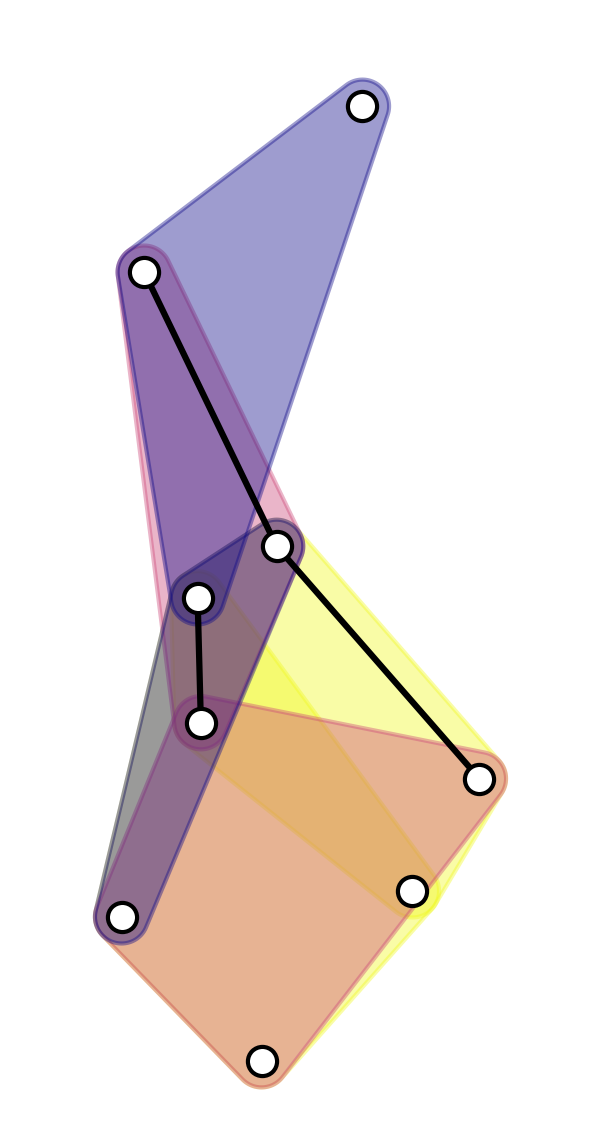
What structures exist in hypergraphs that we can’t study in graphs at all?
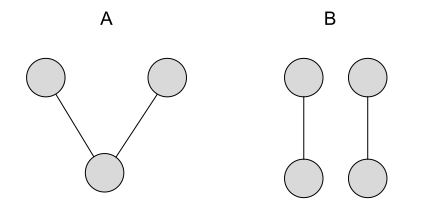
One answer: two-edge motifs.
2-edge motifs in (simple) undirected graphs
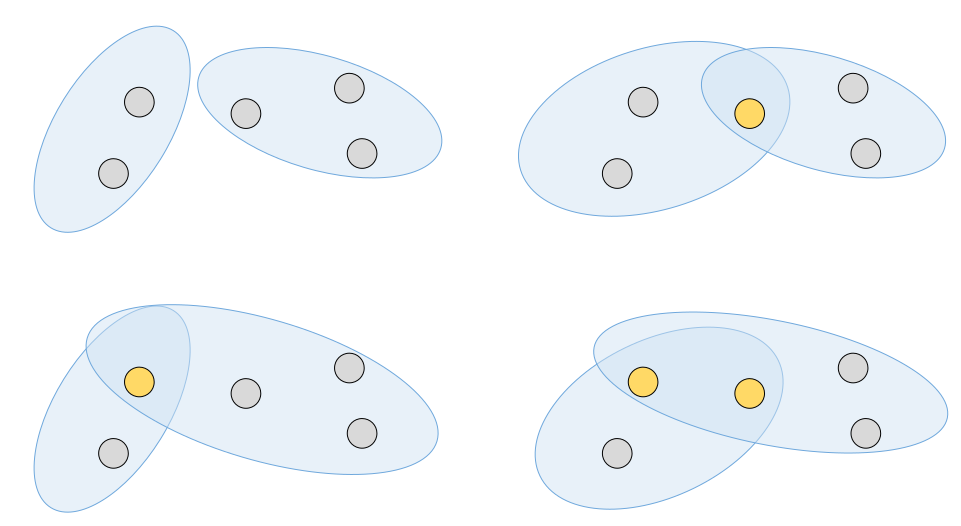
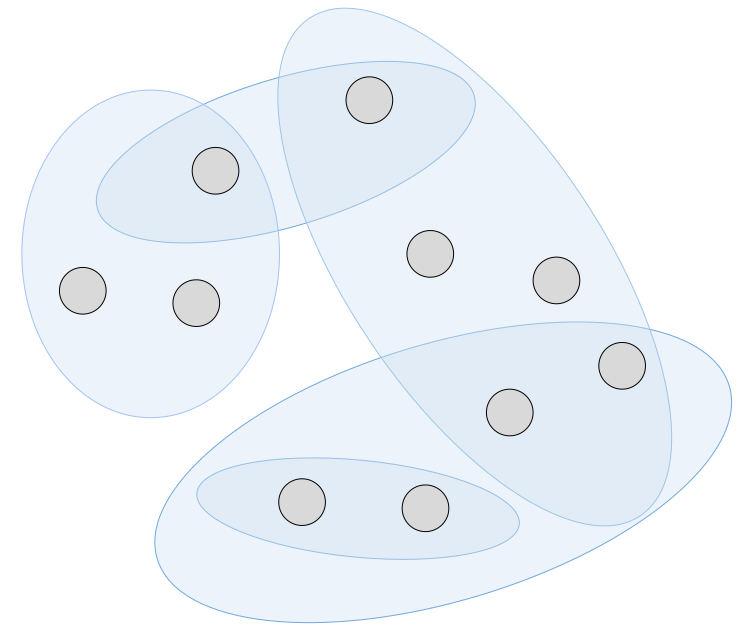
2-edge motifs in hypergraphs
Claim: What’s special about the structure of hypergraphs is that they have diverse, undirected, two-edge motifs: intersections.
Intersections in Temporal Hypergraphs
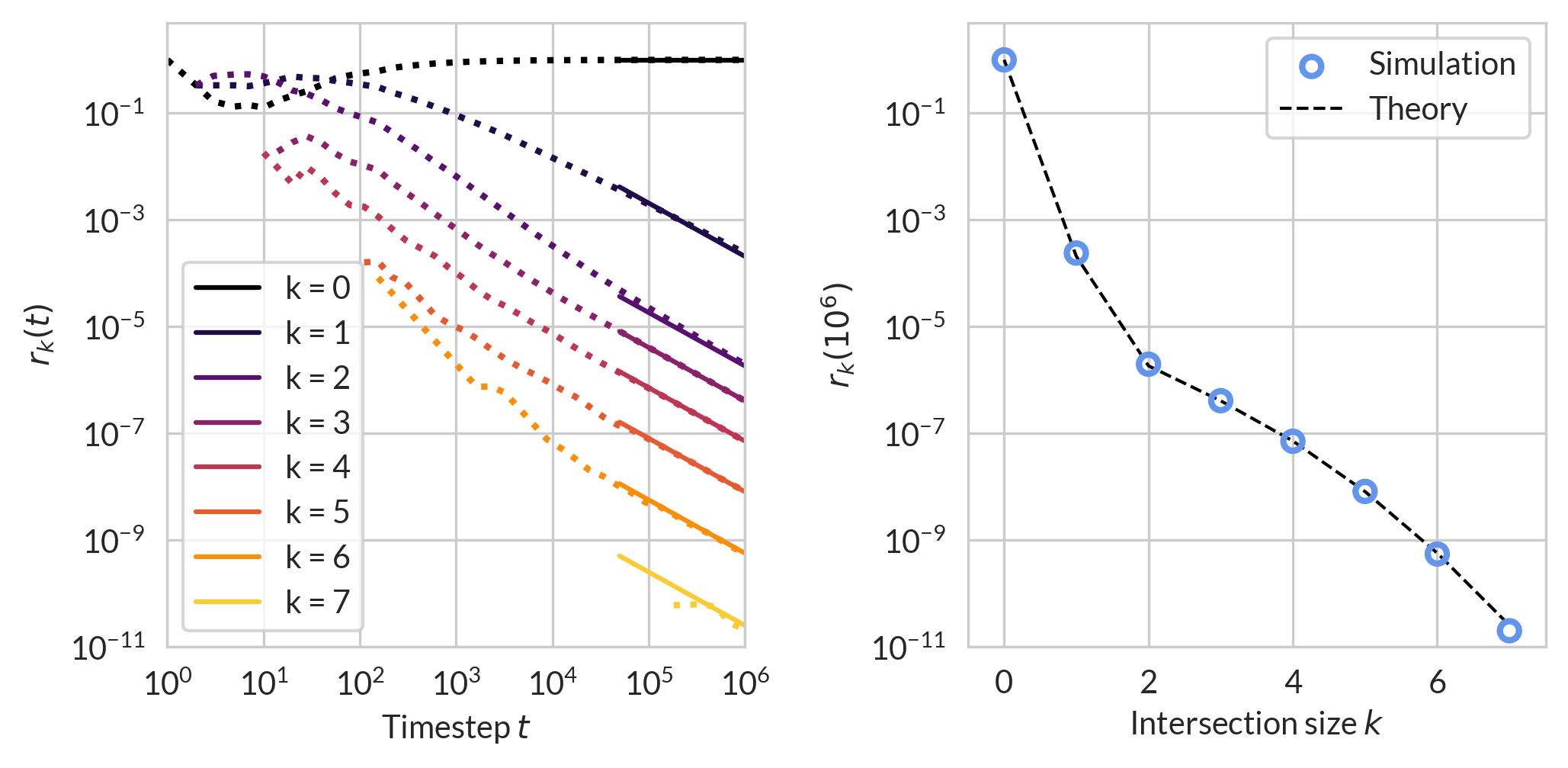
Let \(r_k^{(t)}\) be the probability that two uniformly random hyperedges which arrive before time \(t\) have an intersection of size \(k\).
In empirical hypergraphs, \(r_k^{(t)}\) often decays at rates close to \(t^{-1}\) or \(t^{-2}\), regardless of \(k\).
Benson, Abebe, Schaub, and Kleinberg (2018). Simplicial closure and higher-order link prediction. PNAS
Chodrow (2020). Configuration models of random hypergraphs. JCN
Landry, Young, and Eikmeier (2023). The simpliciality of higher-order networks. EPJ Data Sci.
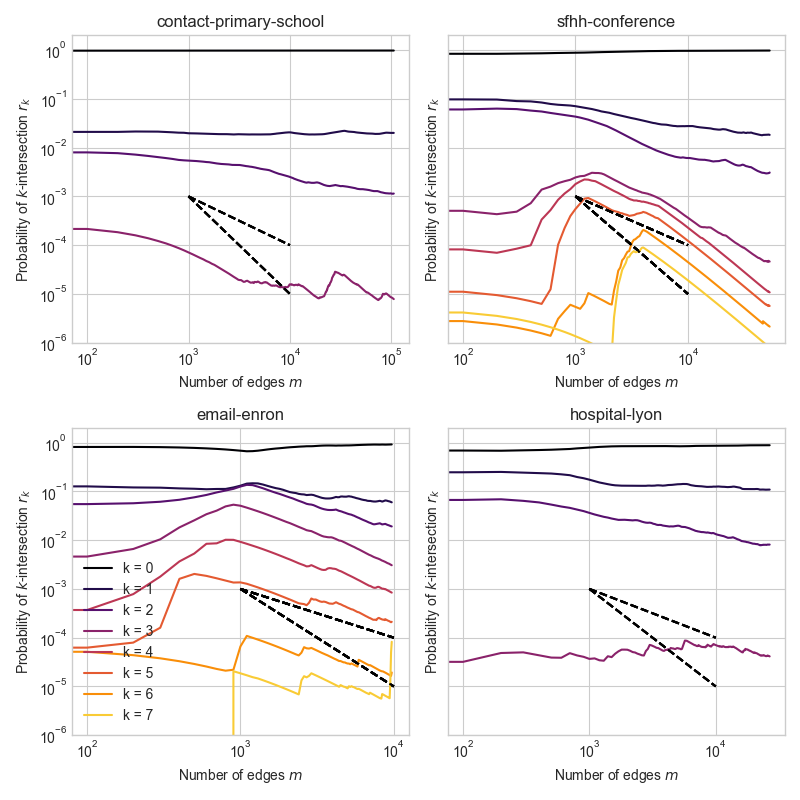
Dashed lines give slope of \(t^{-1}\) and \(t^{-2}\) decay.

|
Xie He |
|
Phil Chodrow |

|
Peter Mucha |
|
|
Xie He |
|
|
Phil Chodrow |
|
|
Peter Mucha |
He
Chodrow
Mucha
|
|
Xie He |
|
|
Phil Chodrow |
|
|
Peter Mucha |
Hyperedge
Copy
Model
Hyperedge Copy Model
Inspo from…
Benson, Kumar, and Tomkins (2018). “Sequences of Sets.” KDD
Benson, Abebe, Schaub, and Kleinberg (2018). “Simplicial closure and higher-order link prediction.” PNAS
Avin, Lotker, Nahum, and Peleg (2019). “Random preferential attachment hypergraph.” ASONAM
Hyperedge Copy Model
In each timestep…
Hyperedge Copy Model
Select a random edge
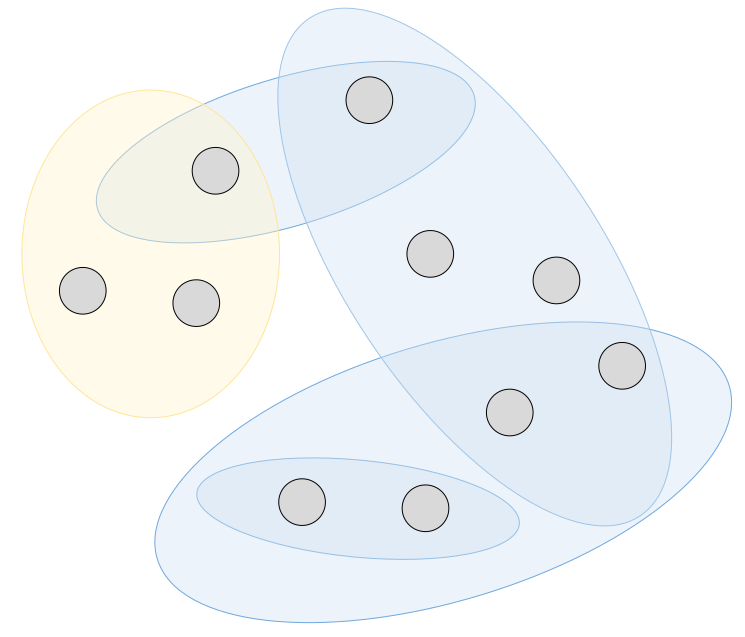
Hyperedge Copy Model
Select random nodes from edge
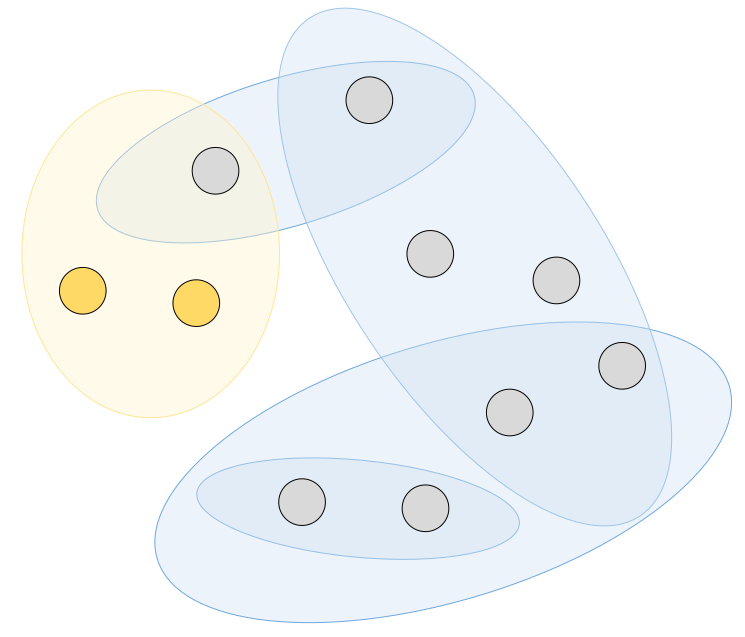
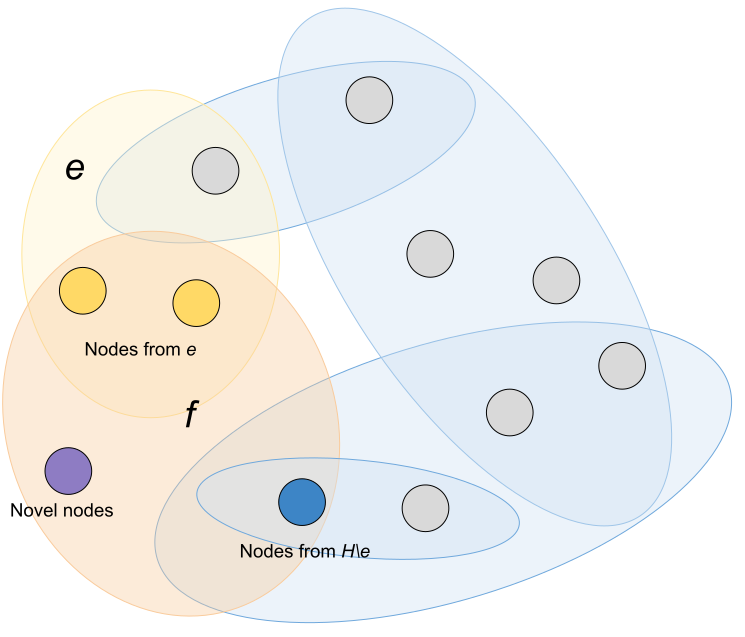
Hyperedge Copy Model
Add nodes from hypergraph
Add novel nodes
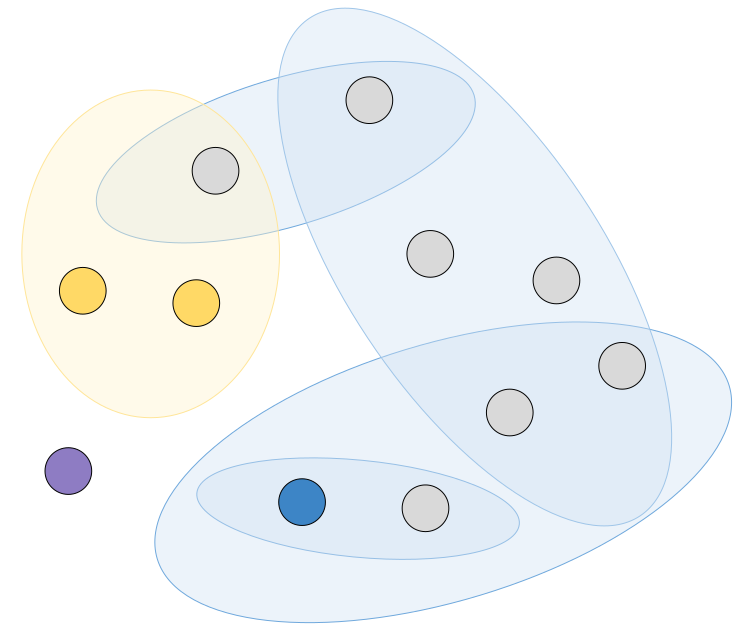
Hyperedge Copy Model
Form edge
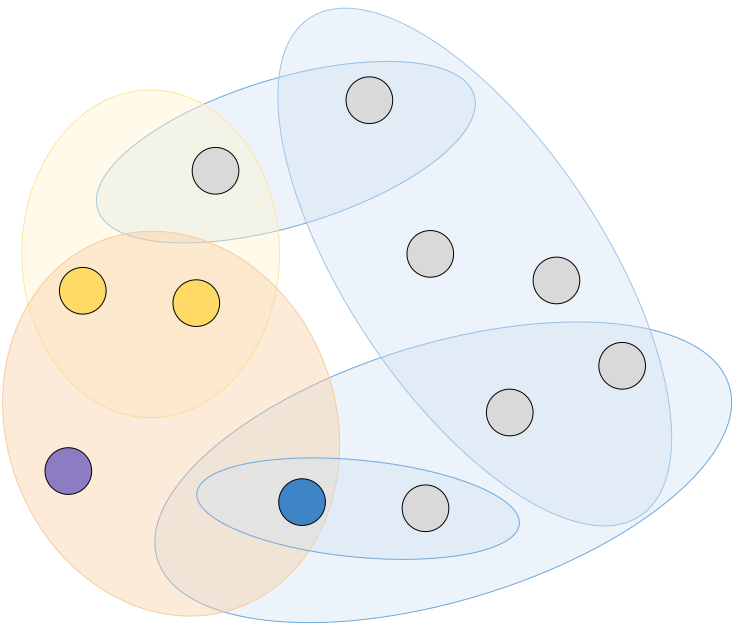
Hyperedge Copy Model
Repeat
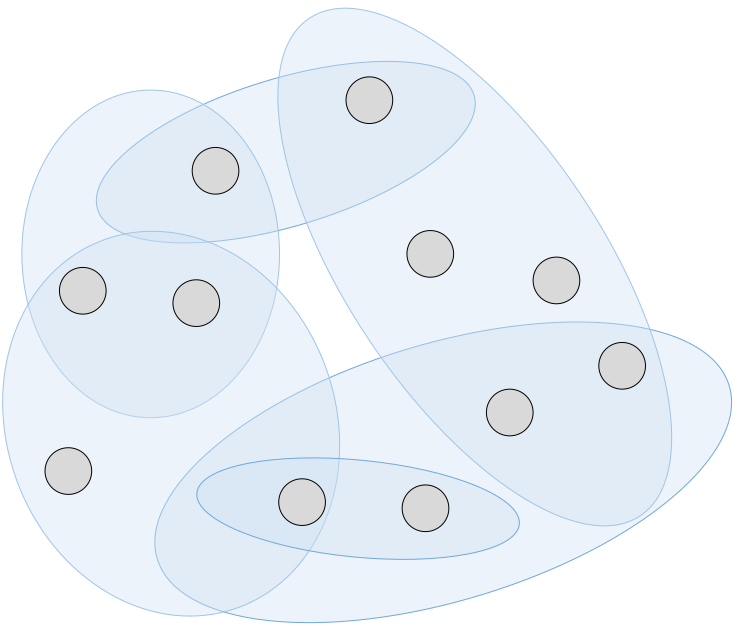
Hyperedge Copy Model
Repeat
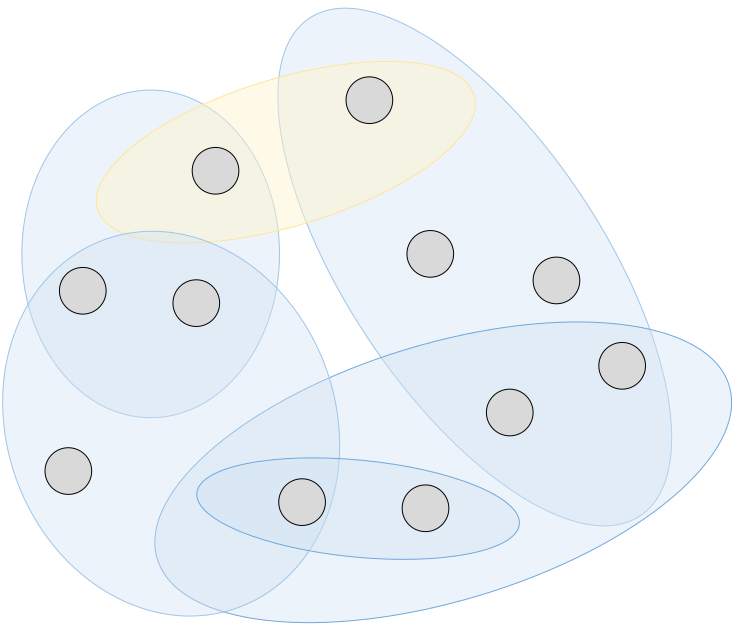
Hyperedge Copy Model
Formally
In each timestep \(t\):
- Start with an empty edge \(f = \emptyset\).
- Select an edge \(e \in H\).
- Accept each node from \(e\) into \(f\) with probability \(\eta\) (condition on at least one).
- Add \(X \sim \boldsymbol{\beta}\) novel nodes.
- Add \(Y \sim \boldsymbol{\gamma}\) nodes from \(H \setminus e\).
Edge intersections
Proposition (HCM ’25): There exist constants \(q_k\) such that, as \(t\rightarrow \infty\), \(r_{k}(t) \simeq \begin{cases} q_k & \quad \text{if } k = k_0\\ \color{#ff9f1c}{t^{-1}} q_k &\quad \mathrm{otherwise}\;. \end{cases}\)
Degree and edge-size distributions
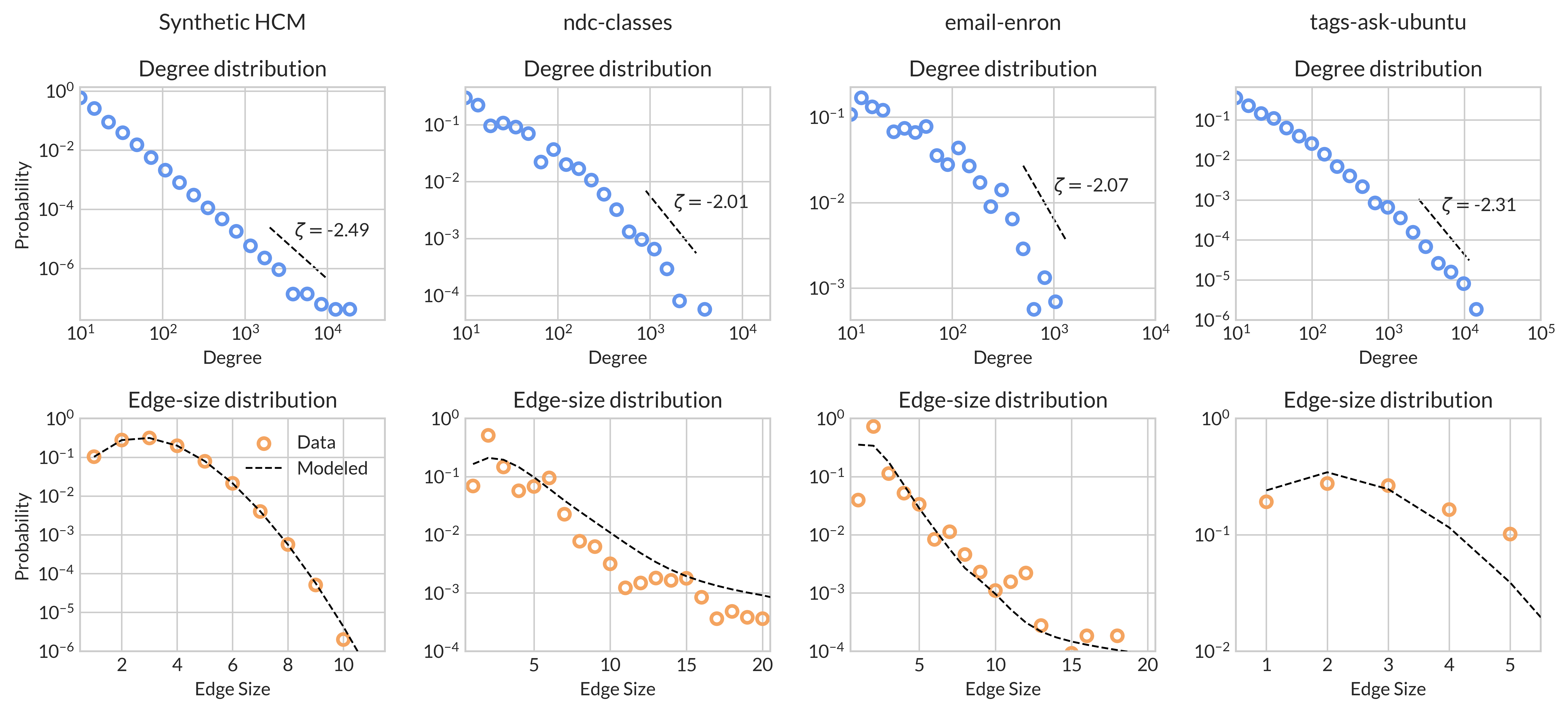
From statistically-inferred parameters, not regression fits!
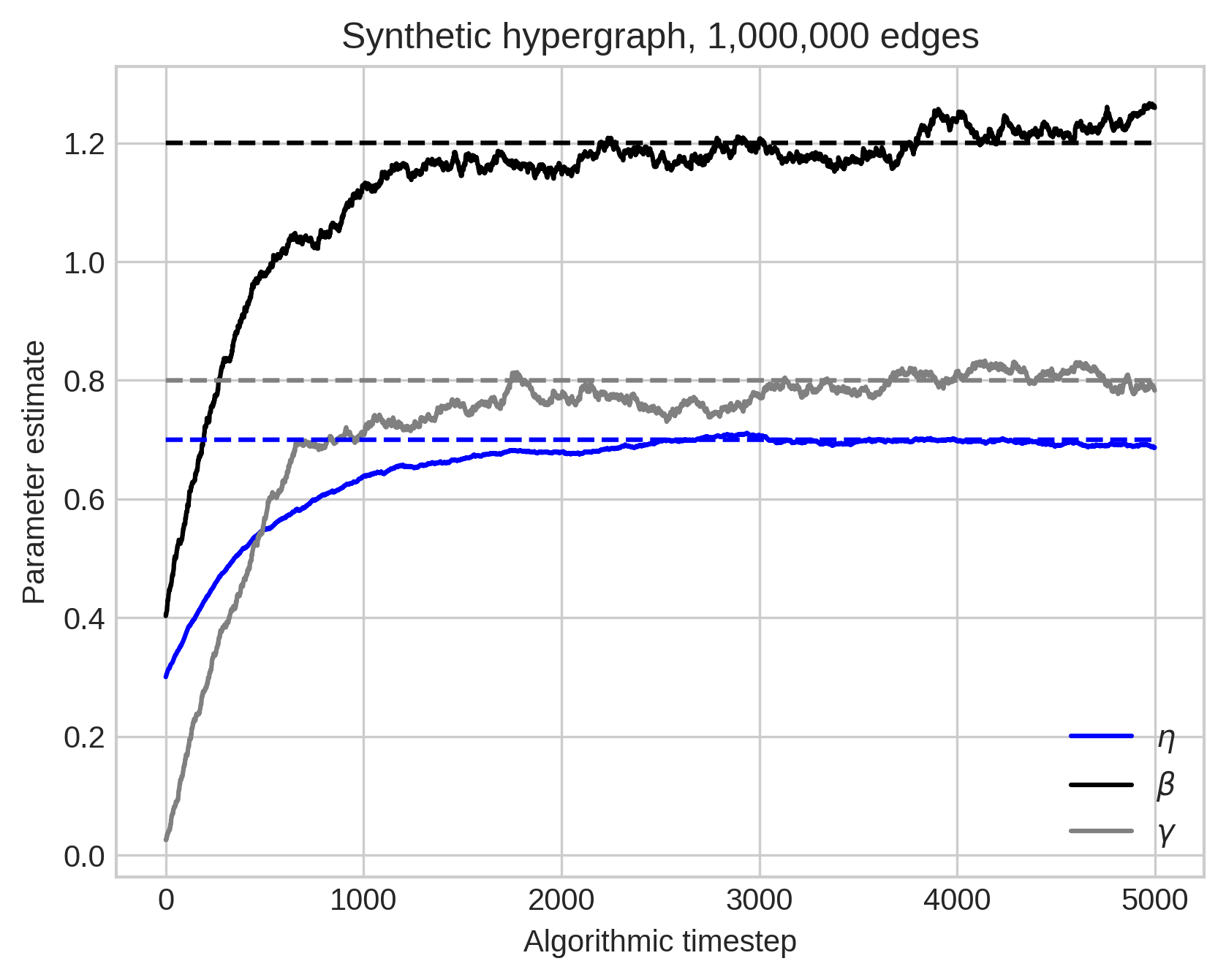
Scalable online learning via stochastic EM
Aim: given the sequence of edges \(\{e_t\}\), estimate:
- \(\eta\), the edge retention rate.
- \(\beta\), the distribution of the number of novel nodes added to each edge.
- \(\gamma\), distribution of the number of pre-existing nodes added to each edge.
- Sample \(e_t\) and form a belief about seed edge \(f\).
- Update a vector of expected sufficient statistics \(\theta_t\) and current parameter estimates \(\bar{\eta}\), \(\bar{\beta}\), and \(\bar{\gamma}\).
- Repeat until tired.
Thank you!!
Hypergraphs have interesting two-edge motifs (intersections). Learnable, mechanistic models of hypergraph growth can be tractable and predictive.
Edge correlations and link prediction in growing hypergraphs. He, Chodrow, and Mucha. Physical Review E (2025)
Xie He
Peter Mucha

Homophily in Hypergraph Growth??
 Violet Ross (CU Boulder)
Modeling Homophilic Hypergraph Growth Using Edge Copying (#201)
Wednesday @4:45pm in Central Square